
Brazilian Studies Programme hosts discussion on democracy and Brazil’s 2026 elections
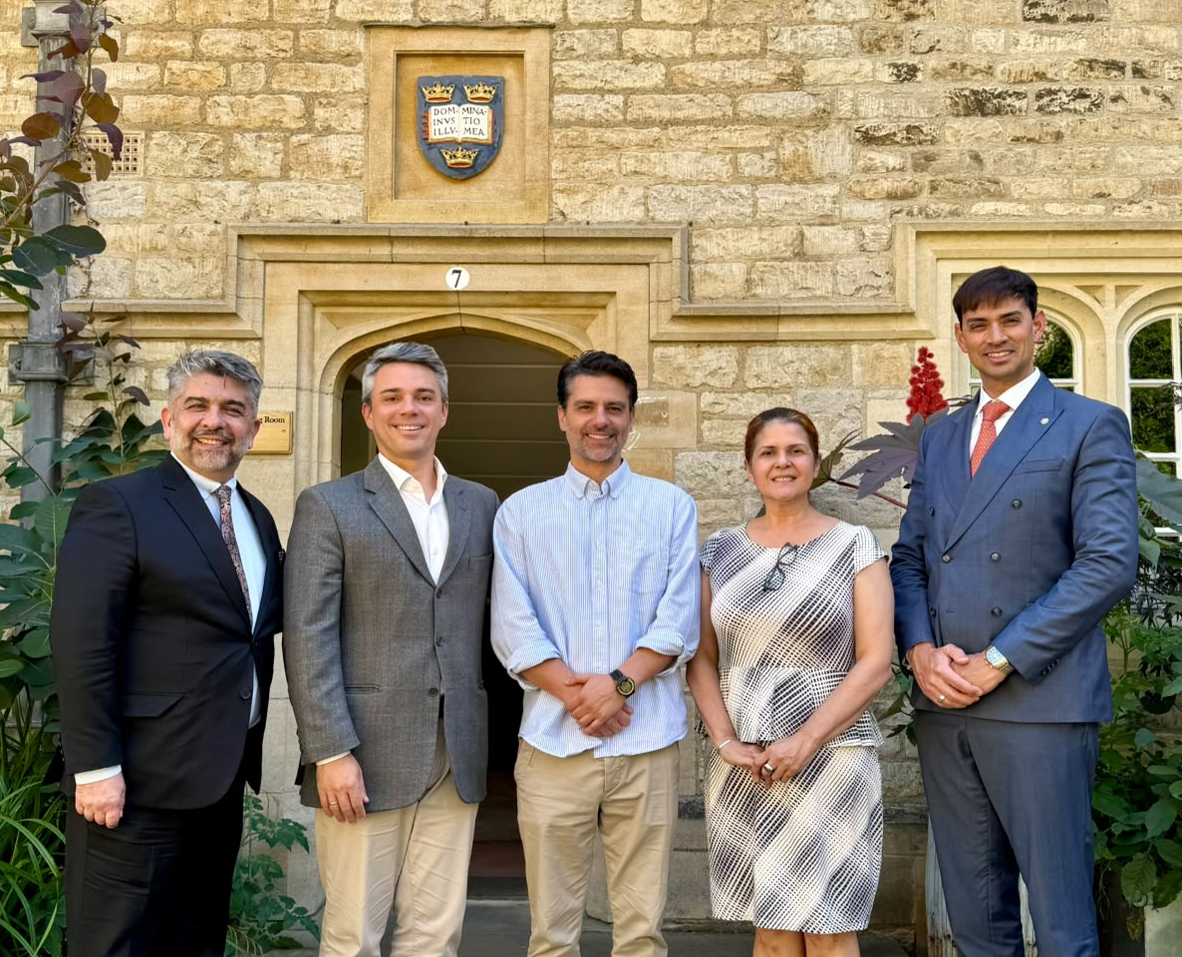
Ahead of Brazil’s 2026 elections, the Brazilian Studies Programme at the Latin American Centre brought together academics and practitioners on 10 August 2026 to discuss the country’s democratic institutions and the challenges facing its electoral process.
Convened by Dr Felipe Krause, Head of the Brazilian Studies Programme, the meeting took place at the beautiful St Edmund Hall. Guests included constitutional lawyer Saul Tourinho Leal; journalist Ariel Palacios; Vitoria Nabas, a London-based partner at Gunnercooke LLP; and William Akerman, Director of Strategic Affairs at Brazil’s Superior Electoral Court (TSE).
Drawing on his involvement in drafting the 2026 electoral rules, Akerman addressed disinformation, artificial intelligence and public confidence in Brazil’s electoral system. He explained how electronic voting combines safeguards and opportunities for scrutiny throughout the electoral cycle, including public security tests and independently verifiable polling-station results. He also highlighted efforts to widen participation, from support for underrepresented candidates to transport for voters with disabilities or reduced mobility, emphasising that electoral integrity depends on both reliable procedures and meaningful access to political rights.
Leal reflected on the centrality of Brazil’s Constitution to democratic life and the importance of upholding constitutional principles through political change. His contribution highlighted the role of constitutional commitments in sustaining democratic institutions and the rule of law.
Palacios placed Brazil’s elections in a wider Latin American context, comparing electoral contests across the region in 2026 and discussing the trend towards governments of the right. His contribution opened a comparative discussion of Brazil’s political trajectory within a changing regional landscape.
Nabas brought a perspective from legal practice in London, discussing Brazilian businesses expanding into the UK and Brazilian executives relocating to London. Her contribution connected the discussion with the practical concerns of companies and professionals establishing themselves abroad, and the business and professional ties linking Brazil and the UK.
The lively, non-partisan exchange reflected the Brazilian Studies Programme’s commitment to connecting academic research with professional experience and deepening international understanding of Brazil in the lead-up to the elections.