
Dr Ruoxi Liu

Research Associate

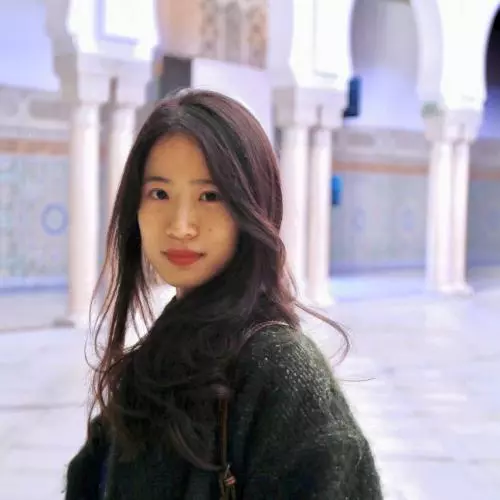
Dr Liu is standing side on, looking at the camera. She has long dark hair and is wearing an oversized dark green knitted cardigan.

I am a Stanley Ho Junior Research Fellow at Pembroke College, University of Oxford. My primary research interests lie in investigating grassroots creativity, community activism(s), alternative practices, and care under restricted socio-economic-political contexts. While the context I primarily engage with is contemporary China, I am attentive to how local practices and practitioners travel across the ‘borders’ and connect with one another.

Trained as a sociologist of work and culture, my research has focused on the self-employed/independent workers, freelancers, cultural workers/artists, craft workers and craft-making, and alternative communities in contemporary China. This research stream was initially driven by a curiosity about what it means to ‘being independent as a creator’ in the Chinese context. As my engagement and practices with independent cultural workers and their communities deepened, I came to recognise their individual and community-based experiments with alternative lifestyles, which is a hopeful and creative journey yet with uncertainties and very concrete obstacles. My continuing engagement with my interlocutors (since 2020) has allowed me to go deeper to one of my field sites – Jingdezhen and explore the changing meaning and politics of craft-making in China.

I completed my PhD and MPhil from the Department of Sociology, University of Cambridge. Based on an ethnographic study from May 2020 to April 2021 across a number of Chinese studies, my PhD thesis entitled The Meaning of Being Independent: Precarities of Work and Lifestyles and Alternative-Seeking among Chinese Self-Employed Cultural Workers, investigates various forms of precarities and reveals the trends of ‘individuality’, ‘creativity’, ‘autonomy’ and ‘self-sufficiency’' in contemporary China. I am turning this thesis into a book. The monograph will highlight how independent cultural workers seek alternatives against various precarities in a context full of rising uncertainties. It will also address the sense of ‘temporality’ and the drifting features of independent cultural workers. The monograph wishes to contribute to a more nuanced understanding of cultural/creative work, cultural/creative workers, particularly among those who lack certified cultural capital or who consciously embrace ‘amateurism’ and grassroots practices. A more ethnographic approach will be taken when investigating their communities, from which I wish to develop new insights into the individual-society-state relationship as well as individual agency at the grassroots levels in China and beyond.

My other ongoing project is on 'Craft Labour, Production, and Creation in Transition' . Contextualised in Jingdezhen, a historically known but contemporary vital ceramic town and China's porcelain capital, this ethnographic study seeks to refresh our understanding of self-actualisation, alternative-seeking, and the trends of individualisation accompanying the rise of the creative economy in China through the lens of crafts and craft-making and eventually ask the changing meaning of doing craft work in contemporary China. It is also a case study investigating the power dynamics within craft production between individuals (craft workers and their customers), society (art agencies including art galleries, museums, alternative cultural spaces, select shops, and digital platforms), and the state institutions. More broadly, it can illuminate the process of heritage-making and urban re-development in China.

I enjoy teaching and exchanging ideas with students. In 2024-2025, I was a departmental lecturer in the Contemporary Chinese Studies programme at OSGA; In 2025-2026. I teach for the School of Global and Area Studies and the Faculty of Asian and Middle Eastern Studies.

Research Disciplines:

  • Sociology
  • Anthropology
  • Cultural Studies
  • Chinese Contemporary Studies

Research keywords:

  • Independent work
  • Precarities
  • Grassroots creativity
  • Alternative cultural practices
  • Alternative spaces
  • Everyday activism
  • Care

Research Clusters: