
Africa's Open Skies Problem: Why Airlines Can Fly but Not Compete
Arthur Shirichena
24 September 2026
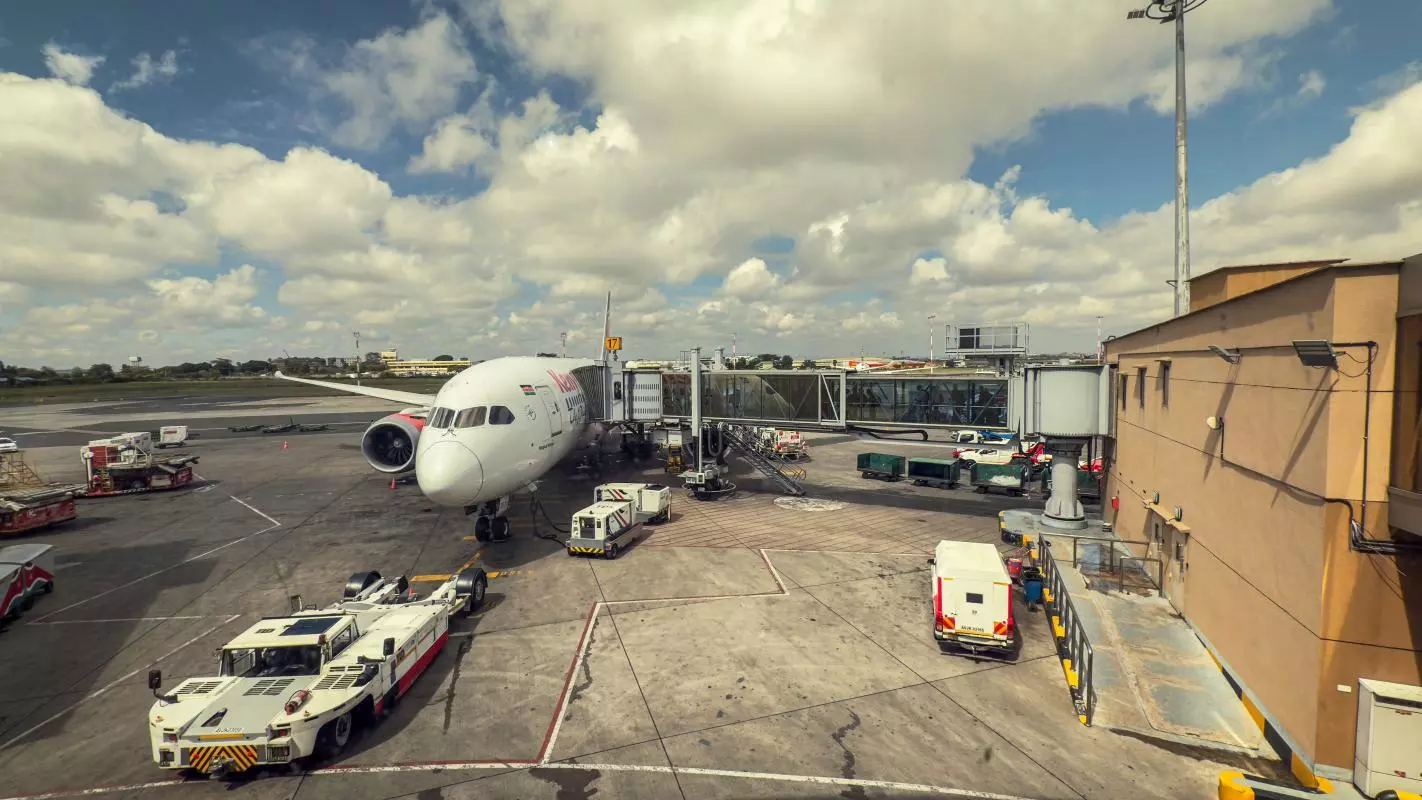
Photo credit: Roger - stock.adobe.com
For more than two decades, African governments have pursued one of the world's most ambitious aviation integration projects. The Single African Air Transport Market (SAATM), built upon the Yamoussoukro Decision of 1999 and recognised as a flagship project of Agenda 2063, seeks to create a single liberalised aviation market capable of stimulating trade, tourism, investment and continental mobility. Yet despite widespread political endorsement, African air transport remains one of the world's most fragmented markets. Airfares remain among the highest globally, many city pairs still require passengers to transit through Europe or the Gulf, and airlines continue to encounter significant barriers when attempting to expand across borders. The central question is therefore no longer whether Africa supports open skies, but why open skies have produced so little practical integration?
The conventional explanation has been economic. Commentators frequently attribute slow implementation to weak airlines, insufficient infrastructure or concerns over competition from dominant carriers. While these factors matter, they overlook a deeper institutional problem. African airlines are generally permitted to fly across borders under liberalisation commitments, but they often cannot compete on equal terms because governments continue to impose route restrictions, delay traffic rights, restrict currency repatriation, apply discriminatory taxes or adopt regulatory measures that undermine market access. These are not simply economic failures; they are failures of governance.
The missing ingredient is enforcement
Unlike mature regional aviation markets, SAATM relies heavily on political goodwill rather than credible legal accountability. Where governments fail to comply with liberalisation commitments, affected airlines have few effective remedies beyond diplomatic engagement or prolonged negotiations. The result is regulatory uncertainty that discourages investment and weakens confidence in the African aviation market. Europe offers an instructive comparison. The European Union's internal aviation market succeeded not simply because Member States agreed to liberalise, but because liberalisation was backed by robust supranational institutions. The European Commission actively monitors compliance, while the Court of Justice of the European Union provides authoritative judicial oversight. Airlines and Member States therefore operate within a legal environment where commitments are enforceable rather than aspirational.
Africa has largely adopted the economic principles of liberalisation without replicating the institutional architecture that makes liberalisation effective. This explains why the legal right to market access often differs significantly from the commercial reality experienced by airlines. Recent developments, however, suggest that African policymakers increasingly recognise this implementation gap.
The African Air Transport Convention and Expo held in Lomé in June 2026 marked an important shift in continental aviation governance. Rather than producing another broad political declaration, African Ministers adopted both the Lomé Declaration and, significantly, an accompanying Implementation Matrix. This represents a subtle but potentially transformative change in approach. Instead of focusing solely on principles, the Implementation Matrix introduces measurable actions, institutional responsibilities, indicative timelines and reporting arrangements designed to improve accountability for SAATM implementation.
Historically, implementation has been SAATM's greatest weakness. States could publicly endorse liberalisation while quietly maintaining restrictive bilateral agreements or administrative barriers that prevented effective competition. Without mechanisms to monitor compliance or consequences for non-performance, implementation depended almost entirely on political will. The Lomé process seeks to move African aviation away from aspirational diplomacy towards structured implementation. Importantly, Ministers requested the African Civil Aviation Commission (AFCAC) to prepare a comprehensive post-Lomé implementation roadmap identifying priority actions, responsible institutions, timelines, resource requirements and reporting mechanisms.
The persistence of blocked airline funds illustrates this governance gap. For several years, airlines operating in countries such as Nigeria and Zimbabwe experienced significant delays in repatriating ticket revenues because of foreign currency shortages and exchange control restrictions. Although market access had formally been granted, airlines were unable to realise the commercial benefits of operating those routes. Such disputes demonstrate that liberalisation requires more than traffic rights. It also depends on effective legal and institutional mechanisms capable of ensuring that States comply with their obligations.
Although the adoption of Annex 3 to the Yamoussoukro Decision in 2022 established a formal dispute settlement mechanism for SAATM, important institutional challenges remain. The mechanism represents a significant legal development, but it is not yet equivalent to an independent judicial body capable of consistently enforcing liberalisation commitments. Questions also remain regarding its practical operation, institutional independence and the extent to which airlines, rather than only States, can effectively invoke its procedures. In practice, disputes continue to be resolved largely through political consultations and negotiations, limiting legal certainty for airlines and investors. The challenge, therefore, is not the absence of a dispute settlement framework but whether the existing mechanism provides sufficiently effective enforcement. Rather than abandoning the current framework, African policymakers should consider strengthening it through greater institutional independence, clearer procedural rules and, ultimately, the evolution of a specialised aviation tribunal or equivalent judicial body capable of delivering consistent and binding decisions under SAATM.
If the existing dispute settlement mechanism proves unable to provide timely, independent and consistent adjudication, African policymakers should consider its gradual evolution into a specialised aviation tribunal or an equivalent judicial institution with clearly defined jurisdiction over SAATM disputes. Such a body would build upon, rather than replace, the current legal framework by providing greater legal certainty and more predictable enforcement where negotiations fail.
These discussions also coincide with the African Union's consideration of a proposed 2027 Theme of the Year focused on leveraging the full potential of SAATM and new technologies for continental integration. If adopted, the initiative would encourage the African Union Commission, AFCAC, the AfCFTA Secretariat and AUDA-NEPAD to strengthen implementation and improve coordination across Member States.
This creates a unique policy window. Instead of viewing the 2027 theme solely as an opportunity to promote connectivity, African institutions should use it to address the governance foundations necessary for sustainable integration. Infrastructure investment, digital transformation and airline expansion are undoubtedly important, but without credible institutions to guarantee compliance, these initiatives risk reproducing the same implementation deficits that have characterised the past two decades. The future success of SAATM therefore depends not only on opening markets but also on governing them effectively. The Lomé Declaration demonstrates that African aviation policy is beginning to shift from vision towards execution. AFCAC's forthcoming implementation roadmap could become the practical vehicle through which this transition occurs, provided it incorporates measurable accountability, transparent reporting and effective dispute resolution alongside technical reforms.
In conclusion, Africa's open skies challenge is not that airlines cannot fly. Increasingly, they can. The challenge is that they cannot always compete within a predictable legal environment. Until that governance gap is addressed, market liberalisation will continue to produce uneven outcomes. Open skies require more than access. They require institutions capable of ensuring that agreed rules are respected. If the next phase of SAATM implementation embraces enforcement as seriously as liberalisation, Africa may finally move from a continent of aviation promises to one of genuine aviation integration.
This article draws on the author's peer-reviewed article:
About the author
Arthur Shirichena is a PhD candidate at the University of Manchester. His doctoral research examines dispute settlement under the Single African Air Transport Market (SAATM), with particular emphasis on institutional design and enforcement mechanisms for African aviation integration.