
Explaining an Icon: The Satraha Hat in Madagascar’s Gen Z Revolution
Gabrielle Robbins
12 October 2026
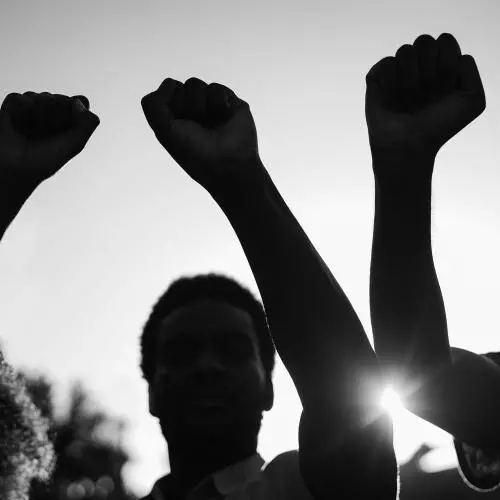
A year ago, Madagascar’s youth took to the streets. Weeks of protests that began in late September throughout the island skewered then-President Andry Rajoelina’s government for its inability to secure basic services like water and electricity, all while Madagascar’s leadership enriched themselves. The national army quickly joined the protests. By 12 October 2025 Rajoelina fled to Dubai under cover of night in a French military helicopter. Colonel Michaël Randrianirina, leader of the elite army unit CAPSAT, then took control of the national government and now leads the island as Chair of the Council for the Re-Foundation of the Republic.
The youth mobilizations were inspired by similar uprisings in Nepal weeks earlier (as discussed in a Spring 2026 joint African Studies-South Asian Studies seminar here at the University of Oxford). Malagasy activists learned from Nepalese protestors on shared Discord channels. And they adopted the same symbol deployed by Nepalese counterparts: a “Jolly Roger” flag from the Japanese manga One Piece. In the manga, this black flag and its smiling crossbones are wielded by “straw hat pirates” who resist government corruption. The Malagasy version replaced the Jolly Roger’s straw hat with a satraha, a colorful, circular, woven hat worn in the southern-central Madagascar highlands. Even as Malagasy Gen Z activists identified with youth movements across Asia and the rest of the world, they also elevated a distinctly local craft to national revolutionary politics.
But it makes a great deal of sense that the satraha would become the calling card of Gen Z activists. The hat is a powerful evocation of the Betsileo ethnic group that inhabit the regions south of the capital, one of 18 different subpopulations who call Madagascar home. Betsileo origins themselves lie in protest against external domination – and their resistance to external power is now legendary on the island.
Betsileo Legacies of Resistance
During the late 1700s and early 1800s, expansionist kings and queens from the neighboring Merina ethnic group sought to expand their control of the island from the royal base in Antananarivo. Beginning with King Andrianampoinimerina and later kings Radama I and Radama II and Queens Ranavalona I and II, the Merina progressively conquered the Betsileo homelands by 1822. Merina royals ousted Betsileo kings from power, compelled fealty to the Antananarivo regime, and demanded forced labor and other forms of bonded service from the communities they absorbed in pursuit of centralized power.
Oral histories I collected during my fieldwork in central Madagascar date the origins of Betsileo ethnic identity to the bonds of solidarity forged in resistance to this royal expansion. “Betsileo” itself means “the many who will never be conquered,” linking together the Malagasy phonemes be (many), tsy (not) and leo (weary, defeated). These legacies of resistance echo in the ethnic group’s very name.
At the height of their power in the mid-1800s, the Merina kingdom had taken control of almost three-quarters of the island. Early Betsileo experiences of subjugation echoed through other regions. But Merina rule ended with French “pacification” of the island in 1896 and the exile of Queen Ranavalona III to French territories in North Africa. While the French sought to reorder Malagasy society in service of their own visions of colonial modernity, they built on some of the systems of power erected by the Merina monarchy, such as island-wide forced labor. European colonization in some ways therefore extended forms of subjugation introduced – and resisted – much earlier.
Under French control, the Betsileo homelands remained hotbeds for the development of nationalist movements against the colonial regime. Several major nationalist leaders of the 20th century originate from the region, like Jean Ralaimongo (who campaigned for Malagasy to have the same rights as the French in the 1910s and 1920s) and Martin Rakotovao (who played a major role in nationalist agitation in the 1930s and 40s). Fianarantsoa, the regional capital, was a hub for periodicals like Lumière, in which authors developed anticolonial rhetoric, alongside other pamphlets published in Antananarivo.
Such nationalist sentiment burst into public view with the 1947 Malagasy Uprising. In this conflict, Malagasy militias attacked French military outposts, plantations, and colonial offices. Violent resistance against the French occurred throughout the Betsileo homelands, as well as in regions further to the east and south, ultimately leading to widespread casualties. Rakotovao would be sentenced to death for his role in this uprising – a sentence commuted upon his exile to Comoros. These long struggles against French rule remain etched in Malagasy national memory. A monument to the 1947 uprising still stands in Fianarantsoa city center.
In Madagascar’s postcolonial social landscape, Betsileo people are now also famous for their regular migration to other regions in search of work and improved opportunities. A friend of mine once said, Betsileo people mitady ahitra. Literally translated, this is a bovine metaphor of cows grazing ever further for good grass; my friend meant that people from this region are always on the move, always eager to seek a better life. This roving reputation has endowed the ethnic group with a certain universality throughout the island.
Betsileo peoples’ ubiquity is also underscored by enduring forms of ritualized friendship between ethnic groups solidified during resistance to Merina and French rule. These bonds, called mpiziva friendships, confer the burial rites of one group on those from another as well as guarantee forms of mutual assistance. Ziva relationships are a core means of strengthening inter-ethnic ties to in turn reinforce the Malagasy social fabric in periods of upheaval. Every Betsileo man of a certain generation I know counts himself as an honorary member of other regional populations on the basis of mpiziva links.
Betsileo people are thus renowned for intensive resistance to external oppression, while their movements throughout the island solidify important cross-population social bonds. It is not a stretch to say that the ethnic group is therefore most commonly associated with a kind of universal brotherhood that is imagined to endure in times of both strife and plenty.
In this context, an iconic Betsileo hat metonymically identifies these broader legacies of resistance and island-wide friendship with a national movement for profound social change. Wielded by youths against Rajoelina’s government, the satraha became an icon of a simultaneous Malagasy collective and a potent symbol of refusal – of a government identified as corrupt and self-serving, a steady increase in unemployment while basic services declined, a status quo of popular immiseration amid elite capture.
The satraha’s bright green and red markings drive this home. Green, associated in Malagasy color symbolism with the cyclicity of agriculture, identifies hope and renewal. Red conjures the island’s famous iron-rich soil and the power of blood and ancestry. It also recalls prior generations of militant resistance movements, the menalamba (lit. “red shawls”), so named because they smeared earth on their clothes as camouflage. Despite the hat’s regional specificity, its coloring deploys symbolism universal on the island that potently demonstrates the Gen Z movement’s convictions.
Afterlife of an Icon
The Gen Z activists elevated a regional hat to a revolutionary symbol, but now the new government under General Randrianirina is embracing traditional Malagasy garb in its own ways. For example, a recent decree called for “Malagasy dress” to be worn by government representatives and public officials every Friday, beginning 31 July. The press releases announcing this move hailed the “valorization of Malagasy national culture” and the performance of national pride. A prominent news article shows a government official wearing a round, brimless version of a Betsileo satraha, a satro-bory.
Here, public embrace of Malagasy hats, textiles, hair styles, and other visible markers of the island’s heritage are deployed to counter an enduring sense of French influence and to reassert a populist vision of a free, strong, and proud Madagascar. But it also extends the same logic of Gen Z protestors’ use of the satraha. According to historian Jeannot Rasoloarison, Randrianirina’s government is, like the activists that brought them to power, consciously and visibly recalling earlier periods of anticolonial agitation: “The nationalists of the 1930s and 1940s also wore traditional clothing in the 1930s and 1940s, when it was a major question to recover a true Malagasy identity.”
As the “reconstruction” of the country unfolds, it remains an open question whether the new administration will be able to fulfill the heady promises that toppled Rajoelina from power. Randrianirina’s government has intervened heavily in the major utility, JIRAMA, with promises to improve access to water and electricity. It has consistently emphasized “integrity” and publicly moved against powerful figures embroiled in money laundering, such as magnate Mamy Ravatomanga, a close associate of ex-President Rajoelina. It has called for a total reset, a “re-foundation,” of the Malagasy state. There have also been troubling developments: the government has signed weapons deals with Russia, repressed and imprisoned some Gen Z activists, dissolved civilian institutions, and provoked a lingering sense of popular alienation and uncertainty.
But since the events of September-October 2025, it seems that the Malagasy population now know their own power – and will continue to demand meaningful improvement in the country, whether from officials in suits or in satrahas.
Dr Gabrielle Robbins is the Evans-Pritchard Research Fellow in the Anthropology of African Studies at the University of Oxford.